Humanity as part of nature
Earth AbidesHumanity as part of nature names a central reversal in the survivors’ understanding of their place in the world: people no longer imagine themselves as masters of creation, but as one vulnerable species among others. The reversal is made concrete in encounters with animals, outbreaks of disease, and the limits of food and sanitation. Nature does not simply provide resources or mirror human feeling; its independent processes shape the community’s survival, while the community learns to respond selectively rather than presume control.
From mastery to membership
When Ish sees a rattlesnake resting in the sun, he could kill it, but chooses to continue on. His hesitation recalls the horror of having once been bitten; he also considers whether that experience should make him grateful to the animal, or lead him to treat rattlesnakes as a clan represented by a totem. He rejects both hostility and veneration, settling instead on neutrality. The choice is not a claim that the animal is harmless. It marks a changed sense of proportion: Ish recognizes that an individual rattlesnake is not an enemy to be eradicated simply because it belongs to a feared kind.
That reasoning extends beyond the encounter. In the pre-disaster world, Ish understands, people judged other creatures by their usefulness or danger to humanity and assumed that they could manage the living world. Now nature has become too powerful for such confidence. The survivors cannot exterminate rattlesnakes or appreciably alter their numbers, and Ish sees no point in conducting a campaign against them or Mountain lions. A snake near the houses may still be killed to protect children; restraint is not a rule against defense. It is a recognition that protection in a specific circumstance differs from dominion over a species.
Ecological forces in everyday life
The community’s changing relationship with nature is not an abstract philosophy imposed on the landscape. On San Lupo Drive, Cattle become increasingly numerous because the surrounding country suits them, and by Year 5 they are a continual nuisance. They provide abundant, tough meat, but people may encounter a charging bull while simply trying to walk from place to place. The survivors learn to step aside quickly, turning avoidance into the practical skill and informal sport they call bull-dodging. Their lives are shaped not by an orderly human plan for livestock, but by animals whose growing numbers alter ordinary movement and create new hazards.
The next year shows how little control that apparent abundance offers. Drought leaves little grass, and hungry Cattle roam in search of food. At night they break through the strong fence around the vegetable plot. The men fire at the herd, but the garden is already ruined: the milling animals trample the plants without eating them. Grasshoppers then consume what the Cattle have not reached, stripping leaves from trees and flesh from ripening peaches. Their sudden abundance ends in a mass die-off. The sequence exposes the community’s dependence on a precarious balance among weather, animals, insects, and cultivation. A fenced garden and armed defense cannot secure food against a chain of ecological pressures.
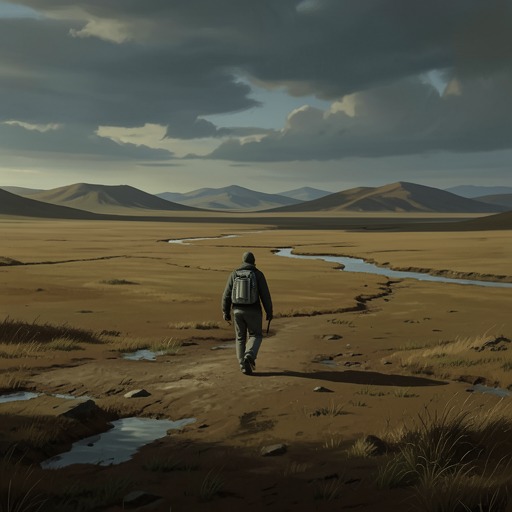
The return of rain makes that dependence visible in a different way. Two weeks after the first rain, grass sprouts on the hills, and the community’s relief gives way to renewed hope. Ish, too, had begun to doubt the earth’s capacity to recover and wonder whether any seed remained. The green hills do not prove that the survivors can command nature; they demonstrate that recovery can come from processes beyond their command. The land’s capacity to renew itself is real, but so is its capacity to withhold what the community needs.
Disease at the human-animal boundary
The novel also presents human vulnerability through the circulation of disease. Early reports describe a new illness spreading rapidly among centers of civilization, apparently outpacing quarantine. A bacteriologist offers several possible origins—an animal reservoir, a newly mutated microorganism, or an escape from a laboratory—but none is established as the cause. The uncertainty matters: human technical knowledge can identify possibilities without controlling the event, and isolation seems ineffective against this airborne disease.
Later, the danger takes a more specific form when Ish realizes that bubonic plague is a common epidemic among Rats. He knows that fleas can move from dead rats to living people and fears that the new human population may be living amid the consequences of a vast rat die-off. He responds by spraying DDT through the house and onto his and Em’s clothing. His precautions follow a concrete chain from animal host to insect vector to human exposure, but they also express how little security knowledge alone can provide. When Em notices his actions, he has to explain the danger he had not initially told her about.
A separate outbreak shows how human practices can make ecological vulnerability more dangerous. During the epidemic, Dick, Bob’s companion on an expedition, falls ill, followed by Ezra and five children. Ish believes the disease is typhoid. Some adults had once been inoculated, but their immunity may have lapsed, and the children have no protection. He understands that prevention had been the principal defense against typhoid and that, once established, the illness must run its course. Looking back, he suspects that Charlie may have carried typhoid germs, though the community cannot know whether Charlie had been ill years earlier or more recently. What it does know is that Charlie, whose personal habits Ish considers unclean, had eaten with two boys for more than a week; poorly built outhouses and flies provide an evident route for wider infection. The group boils drinking water, burns old latrines, fills the pits, and sprays the new ones with DDT, but these measures come too late to prevent exposure. Human health here is inseparable from sanitation, insects, and contact among people; the community cannot treat disease as an isolated misfortune detached from its living surroundings.
Living alongside other species
Late in Ish’s life, a group of younger men leads him toward the bridge and encounters a lion. They keep their dogs close and detour rather than rushing the animal or trying to dominate its path. Ish wonders whether this caution reflects the absence of rifles, the rarity of human encounters, or the young men’s burden of accompanying an old person. Whatever the explanation, he recognizes that they no longer possess the old human dominance or arrogance toward animals. The men do not behave as though the detour humiliates them; they treat it as ordinary, like going around a fallen tree or ruined building.
Ish feels the loss of mastery, but the younger people’s ease suggests that the change is more than a tactical concession. The lion and the men occupy the same landscape, each capable of affecting the other, and neither encounter becomes a demonstration of human supremacy. This scene echoes Ish’s earlier decision not to make war on rattlesnakes: protect people when necessary, avoid needless conflict, and accept limits on what humans can change. The survivors’ adjustment is practical as well as philosophical, shaped by the fact that they no longer have the population, weapons, or infrastructure that once underwrote their claims to control.
Significance for the community’s future
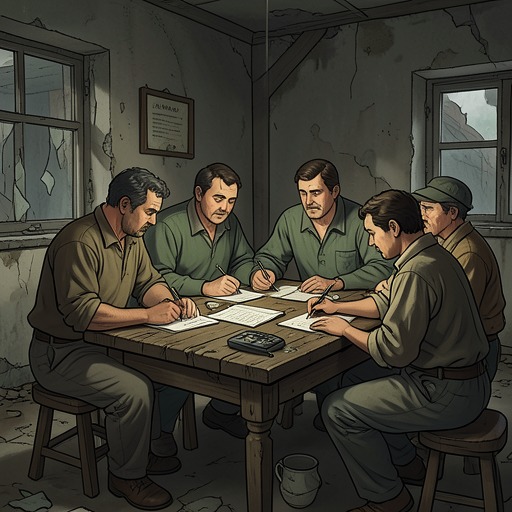
The principle also informs the community’s decisions about human life. In Year 34, a smaller group living across the Bay sends a messenger proposing union with The Tribe. Ish and Ezra oppose the proposal, in part because of fear of disease and the memory of earlier losses; others weigh the need for more members and wives, as well as the dangers of continued intermarriage within the group. Em argues that life cannot be lived by refusing every risk, and that the younger generations will need partners even if death may also follow. The group votes unanimously to admit The Others. The ensuing measles outbreak ends with their recovery, but the decision itself does not guarantee safety; it accepts that humans, like other living beings, must act amid uncertainty rather than wait for a risk-free world.
Across these episodes, the idea of humanity as part of nature gathers force through limits, not a simple celebration of wilderness. Cattle can feed people and destroy their garden; insects can devastate crops and flourish where animals and human practices sustain them; rain can restore grass without making future harvests certain; animals can threaten people without becoming enemies to be eradicated. The community survives by learning the difference between local protection and total command. Ish’s generation remembers a world organized around human mastery, while the younger people’s untroubled detour around the lion gives that change a lived form: humanity remains in the world, but no longer stands outside it.